
-1.jpg?width=2240&height=1260&name=Florida%20Save%20Our%20Homes%20by%20Caroline%20Sesi%20Real%20Estate%20Advisor%20(1)-1.jpg)
Relocating to Florida
Florida Homestead Exemption
Boca Raton Real Estate


For many New York City owners, the new NYC second home tax is changing the way they think about holding a Manhattan condo or co-op that is not their primary residence.
Often referred to as the pied-a-terre tax, empty apartment tax, or the Mamdani tax , this new surcharge adds another layer of annual carrying cost to certain New York City second homes. For owners already questioning whether a New York apartment still makes sense as a second-home asset, that changes the conversation.
The question is no longer just whether you enjoy having a place in Manhattan. It is whether that second home still fits your broader financial picture when annual costs rise and other ownership options may offer a different cost profile.
That is why some NYC second-home owners are beginning to evaluate a different strategy: selling a New York second home and moving that equity into a second home in Boca Raton or Fort Lauderdale, where buyers can compare lifestyle, inventory, and long-term carrying costs more strategically.
The phrase NYC second home tax is commonly used to describe a surcharge aimed at certain New York City second homes, especially condos and co-ops that are not used as a primary residence.
For owners of second homes in New York City, the practical issue is straightforward: if a Manhattan condo or co-op is not your main home, the cost of holding that property may increase materially. That can change the financial logic of keeping a second home in the city, particularly for owners who are already evaluating where they want their capital positioned over the next several years.
For some sellers, the goal is not full-time relocation. It is replacing one second home with another.
Many New York owners affected by the NYC second home tax are not looking to leave the Northeast entirely. Instead, they may be asking a more targeted question: if a Manhattan second home becomes significantly more expensive to hold, would it make more sense to sell it and buy a second home in Boca Raton or Fort Lauderdale instead?
For many buyers, the appeal includes:
For the right buyer, this is less about “moving away” from New York and more about improving where and how a second-home is used.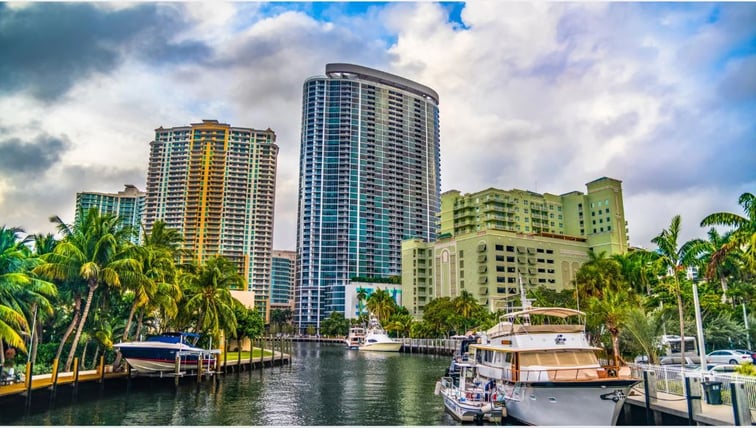
Both Boca Raton and Fort Lauderdale continue to attract New York buyers, but they appeal to slightly different second-home priorities.
Boca Raton often appeals to buyers who want a polished residential setting, privacy, gated communities, and a more relaxed Palm Beach County feel. It can be especially attractive to second-home owners who value country club living, newer communities, and a more residential day-to-day environment.
Fort Lauderdale often attracts buyers who want waterfront living, newer modern inventory, marina and boating access, and a more energetic coastal setting. For second-home buyers who want a mix of convenience, design, and water access, Broward County can offer a compelling alternative.
For many NYC owners, the real question is not whether South Florida is appealing. It is which market, Boca Raton or Fort Lauderdale, better fits the way they actually want to use their second home.
For many second-home buyers, new construction is not just a lifestyle choice. It is also a cost-of-ownership decision.
New York buyers often prefer newer homes or condos because they may offer:
There is also the insurance conversation.
In many cases, newer homes may cost substantially less to insure than older resale properties, In some scenarios, the difference can be ⅓ the cost to insure new vs same home resale. That is one reason many buyers moving equity out of an older northern asset look closely at new construction in Palm Beach County and Broward County.
It is not accurate to assume every new home will cost the same to insure, or that every resale home will be expensive. But for buyers comparing total carrying costs, insurance is often one of the most important lines on the spreadsheet. When moving to South Florida new construction is currently cost less than resale this has not happened in about 40 years.
If you are weighing whether to keep a Manhattan second home or replace it with a property in Boca Raton or Fort Lauderdale, schedule a private consultation to talk through what that transition could look like from the South Florida side.
That depends on your goals.
For some owners, keeping a Manhattan second home may still make sense. For others, the better move may be to sell strategically and reposition that equity into a second home in Boca Raton or Fort Lauderdale that better aligns with today’s tax and lifestyle priorities.
The most important thing is evaluating the decision before higher carrying costs force a rushed timeline.
Before selling a New York property and buying in South Florida, it helps to think through a few practical questions:
Ready to get clarity on your property? Schedule a free consultation, or reach out to look at current new construction opportunities.
The phrase NYC second home tax is commonly used to describe a surcharge aimed at certain New York City second homes, especially condos and co-ops that are not used as a primary residence.
People often use the terms interchangeably. You may also hear it referred to as the empty apartment tax or the Mamdani tax, depending on the context.
Selling the property may remove your future exposure to the ongoing carrying costs associated with that specific asset, but the full tax and transaction implications depend on your situation. You should review any sale with a qualified tax advisor.
Many buyers are drawn to newer homes because they often offer updated design, lower maintenance exposure, and, in some cases, materially lower insurance costs than a similar older resale property.
Which is better for a second home, Boca Raton or Fort Lauderdale?
That depends on your priorities. Boca Raton may appeal more to buyers seeking a refined Palm Beach County residential setting, while Fort Lauderdale may be a better fit for buyers who want waterfront access, newer modern inventory, and a more active coastal feel.
If you are trying to decide whether the NYC second home tax changes the math on your Manhattan property, I can help you evaluate what comes next from the South Florida side.
I work with buyers who are comparing Boca Raton and Fort Lauderdale, looking at second-home options, evaluating new construction, and thinking through how to reposition strategically.
Schedule a private consultation if you want to discuss:
Caroline Sesi is a real estate advisor serving Boca Raton, Fort Lauderdale, and surrounding Palm Beach and Broward County communities. She works with buyers relocating capital from New York and other out-of-state markets, with a focus on resale homes, new construction, and South Florida second-home strategy.
This article is for general informational purposes only and should not be considered legal, tax, insurance, or financial advice. Property classification, tax exposure, insurance costs, and long-term planning outcomes vary based on individual circumstances. Buyers and property owners should consult a qualified CPA, tax attorney, insurance professional, or financial advisor before making any decision related to a New York property, a South Florida purchase, or an asset repositioning strategy.
.jpg?width=2240&height=1260&name=New%20Construction%20Boca%20Raton%20by%20Caroline%20Sesi%20Real%20Estate%20Advisor%20(1).jpg)